


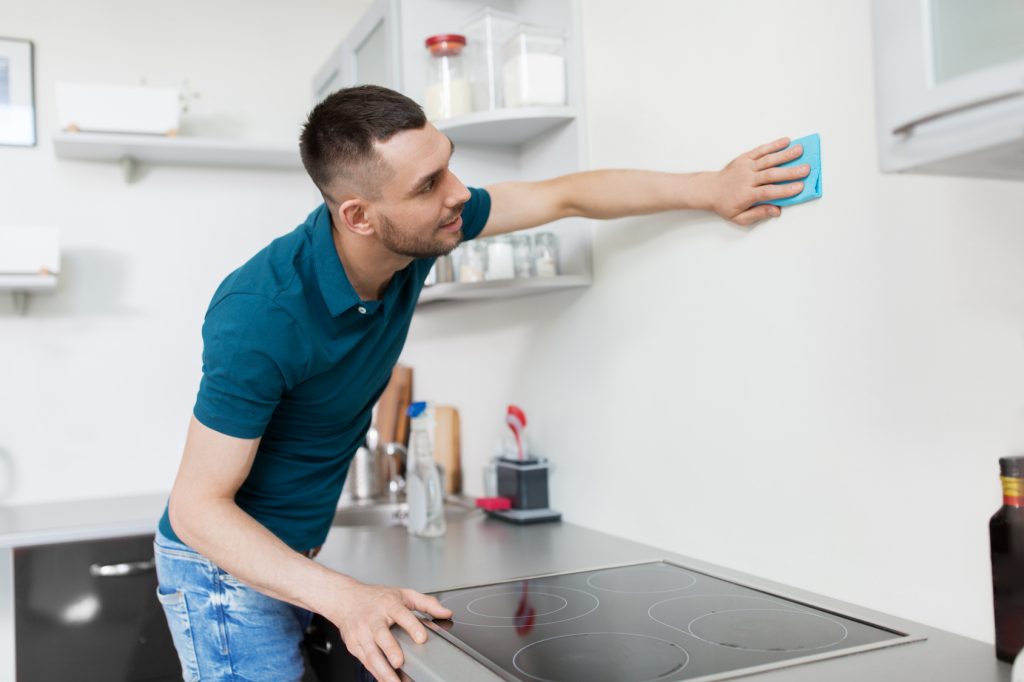
Washable paint is in great demand for painting walls, as it is easy to apply, durable, glossy or matte according to preference, has antifungal properties, prevents dampness, and is very reasonably priced. Walls painted with washable paint are easy to wash, as the name suggests. “Washable” means that it can be washed without losing any of the qualities it had before this process.
Washable paint is an acrylic product dissolved in water. After it is applied to the wall surface, the water in the paint is lost through evaporation, leaving only the acrylic compound on the surface.
For cleaning washable paint , the general tendency is to believe that it can be washed with water, after, of course, the wall has been wiped of dust beforehand.
It is true on the one hand, but if we are talking about resistant stains, such as grease stains around switches and sockets, or stains accidentally made with ink, watercolors or other coloring products, it is good to have knowledge about other, more effective solutions at hand, without risking spreading the dirt.
Steps before cleaning walls
Before you start cleaning walls with washable paint, it is important to keep a few things in mind:
- Check all the cleaning solutions you have. It is essential to have a washable wall cleaning solution or a regular bleach-based cleaning solution if we are talking about white walls. You can prepare the cleaning solutions yourself, so you need vinegar, baking soda, ammonia, etc.
- Gather all the necessary utensils for this cleaning, so you have them handy when you start cleaning the wall with a detergent. You will need a broom, soft, clean, dry cloths, a vacuum cleaner with a brush, and a sponge.
- Clear the wall you are going to clean of any existing objects and accessories, also moving the furniture pieces.
- Protect the floor with plastic wrap or newspapers in the area closest to the wall, ensuring that neither dirt nor cleaning solutions will reach it directly.

What are the rules for washing walls painted with washable paint?
- Before you start washing a wall, it is important to clean the dust and superficial dirt that has accumulated on its surface. Remove dust from the walls and ceiling once every two months. This way, you will maintain them and extend the life of the paint. The best method is with a microfiber duster with a telescopic handle that can reach high up on the ceiling. You can replace the duster with a special brush from the vacuum cleaner. If you don’t have either, try grandma’s method, a clean white cloth rolled up on a broom with a handle. There is no need to move the paintings aside or move the furniture. Covered areas get dirty more easily.
- Before washing the walls, test the paint’s resistance in a less visible place . If you see that the paint is coming off the sponge, it’s best not to wash those walls.
- Wash starting from the bottom, gently scrubbing with a sponge. Wash and rinse a small area, then work your way up to other areas gradually. Dry the wall with a towel.
- Wash the entire wall from the bottom up . This way, any spills won’t stain an already wet wall. This is the trick to cleaning your walls. It’s not just what you use, but how you use it. If you work from the top down, the drips will leave marks after they dry, which won’t be removed by washing them.
- Certain areas of your home need to be cleaned more frequently, such as around light switches or radiators. Dust tends to accumulate on the wall behind TVs or other electronic devices, as well as above radiators. If wiping the dust isn’t enough, give the area a thorough cleaning.
- Do not wash the interior walls of the house too often , and preferably not in the cold season. Dust accumulations are enough to be removed with a dry cloth or a vacuum cleaner. This protects the paint from early deterioration.
- Never clean a recently painted wall . The paint needs time to dry, and washing too soon will dilute the intensity of the color used.
How to clean walls painted with dry-cleanable paint
A dry-cleanable wall cleaning solution can be made with an abrasive material, but very fine. Sandpaper is not useful, because its grain, no matter how fine, will scratch the wall, leaving deep marks. The most effective solution for these dirt stains is the eraser used by schoolchildren. A white eraser, with an abrasive texture, will produce excellent results when cleaning any type of washable paint.

How to clean walls painted with washable paint by washing
- Washing with liquid dishwashing detergent. This requires two clean cloths made of fabric, preferably white, that do not leave lint. Soak a cloth in a solution of water with dishwashing detergent and gently rub the dirty surface. Then wipe with a dry cloth. Do not let the dishwashing detergent drip onto the wall. The method gives very good results for dirt around electrical switches. It is important to remember that the cloth should be in a color as close as possible to that of the walls, and, after each rubbing, before soaking it in the solution again, you should rinse it in a bowl of clean water.
- Washing with a baking soda solution. Get rid of water-resistant dirt with a solution of half a cup of baking soda to 5 liters of lukewarm water. Baking soda is a gentle abrasive, so scratches will not appear. It even removes pencil marks. It can also remove grease or oil stains.
- Washing with a solution of borax and dishwashing detergent. Mix 250 ml, or one cup, of borax with 30 ml, two tablespoons of dishwashing detergent in 4 liters, 16 cups of warm water.
- Washing with a solution of ammonia and dishwashing detergent. Mix 250 ml, one cup, of ammonia and 5 ml, or one teaspoon, of dishwashing detergent in 4 liters, 16 cups of water.
- Washing with ammonia and white vinegar solution. Another natural solution for washing walls can be made by mixing about 250 grams of ammonia, that is, one cup, with half a cup of white vinegar, that is, 125 ml, and four tablespoons, about 65 grams of baking soda in 4 liters of warm water.
- In general, you can also use universal surface cleaning solutions, which should not cause any problems, regardless of the paint used. To be safe, try them on a small, inconspicuous area.

