


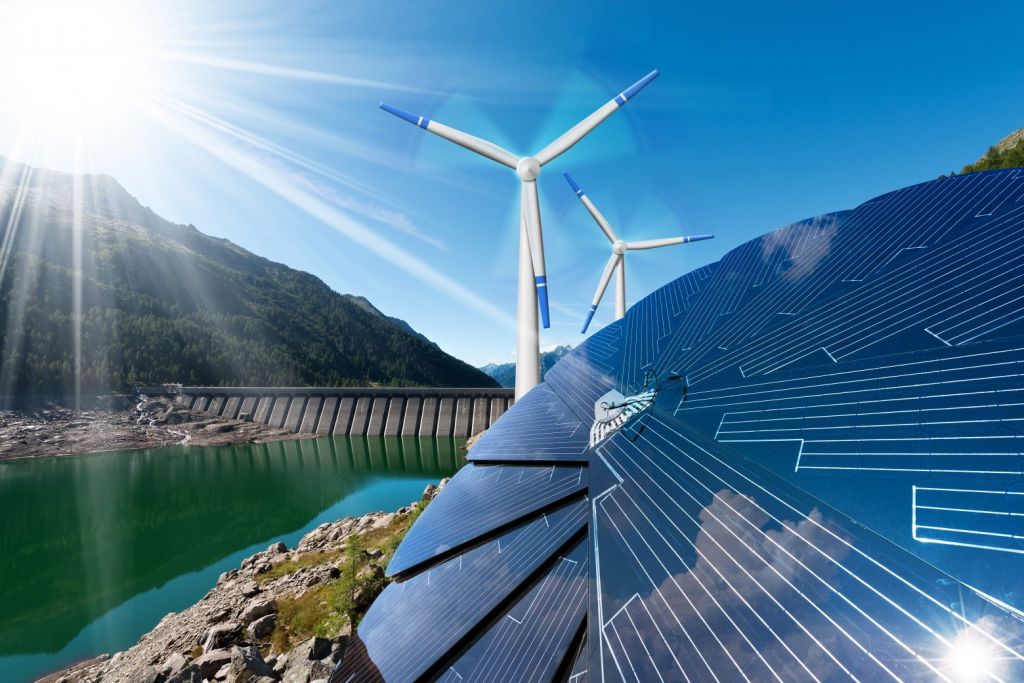
Renewable energy is energy that has been derived from the Earth’s natural resources that are not finite or exhaustible, such as wind and sunlight. Renewable energy is an alternative to traditional energy that relies on fossil fuels and tends to be much less harmful to the environment.
The term renewable energy refers to forms of energy produced by the energy transfer of energy resulting from renewable natural processes. Thus, the energy of sunlight, wind, flowing water, biological processes and geothermal heat can be captured by humans using various processes. All of these non-polluting energy sources are technically usable and can be used to generate electricity, produce hot water, etc.

Non-polluting energy sources
1. Solar energy
This concept refers to the energy that is directly produced by transferring the light energy radiated by the Sun, used to generate electricity, heat the air or water inside buildings. Photovoltaic systems can convert direct sunlight into electrical energy by using solar cells.
- Benefits. One of the benefits of solar energy is that sunlight is endlessly functional. Relying on solar energy, rather than fossil fuels, also helps us improve public health and environmental conditions. Many governments incentivize investment in solar energy by providing tax rebates or credits.
- Current limitations. While solar power will save money in the long run, it tends to have a significant upfront cost for most households. For individual homes, homeowners must have ample sunlight and space to arrange their solar panels, which limits who can realistically adopt this technology on an individual level.
2. Wind energy
Wind farms capture the energy of wind flow by using turbines and converting it into electricity. Wind power generation systems can power many different organizations, while wind farms are used to help pre-existing energy systems. Technically, wind energy is another form of clean energy . “Wind” is caused by temperature differences in the atmosphere combined with the Earth’s rotation and the planet’s geography.
- Benefits. Wind energy is a clean energy source that does not release harmful products that can cause environmental degradation or negatively affect human health. Investments in clean energy sources such as wind energy can open up new avenues for job creation and training, as turbines need to be maintained and kept running.
- Current limitations. Wind farms are built in rural or remote areas, far from the major electricity needs of cities. Wind energy must be transported via transmission lines, which leads to higher costs. Although wind turbines produce very little pollution, some cities oppose them because they dominate skylines, generate noise, and threaten local wildlife such as birds.

3. Hydroelectric power
This renewable energy is associated with dams that retain water and direct it through a conduit to turbines to produce electricity.
- Benefits. Hydroelectric power is very versatile and can be generated using both large-scale and small-scale projects, such as underwater turbines and lower dams on small rivers and streams. Hydroelectric power does not generate pollution and is an environmentally friendly option for our environment.
- Current limitations . Although hydroelectric power does not pollute the air, it disrupts waterways and negatively affects the animals that live in them, changing water levels, currents, and migration paths for many fish and other freshwater ecosystems.
4. Geothermal energy
Geothermal energy is the geothermal heat that sometimes rises to the surface through water geysers or mofettas. This heat can be captured and used to produce electricity used to operate a turbine.
- Benefits . Geothermal energy is not as common as other types of clean energy sources, but it has significant potential for providing renewable energy. Because it can be built underground, it leaves very little footprint on the land. Geothermal energy is naturally fed and therefore does not risk depletion on a human time scale.
- Current Limitations . Cost plays a major factor when it comes to the disadvantages of geothermal energy. Not only is it expensive to build the infrastructure, but another major concern is its vulnerability to earthquakes in certain regions of the world.

5. Energy produced by the ocean
The ocean can produce thermal energy and mechanical energy. Ocean thermal energy is based on the surface temperatures of the water. Ocean mechanical energy uses the movement of water during the ebb and flow of tides, created by the rotation of the Earth and the gravity of the Moon.
- Benefits : Unlike other clean energy sources, wave energy is predictable and it is easy to estimate the amount of energy that will be produced. This type of renewable energy is abundant, the most populated cities tend to be near oceans and ports, which makes it easier to harness this energy for the local population.
- Current limitations : This renewable energy can only be used by those who live near the ocean. Although it is a very clean source of energy, large machines must be built nearby to help capture this form of energy, which can cause disruption to marine life.

6. Hydrogen
When hydrogen is released from the compounds it is bound to, it becomes a very good and non-polluting fuel that can produce electricity and heat.
- Benefits : Hydrogen can be used as a clean-burning fuel, leading to less pollution and a cleaner environment. It can also be used for fuel cells, which are similar to batteries and can be used to power an electric motor.
- Current limitations : Because hydrogen requires energy to produce, it is inefficient when it comes to preventing pollution.
7. Biomass
Biomass is organic matter that comes from recently living plants and organisms. There are various methods used to generate energy using biomass. This can be done by burning biomass or by harnessing the methane gas that is produced by the natural decomposition of organic materials in landfills.
- Benefits. Using biomass in renewable energy production creates carbon dioxide that is put into the air, but regenerating plants consumes the same amount of carbon dioxide, balancing the atmosphere. Biomass can be used in a number of different ways in everyday life, not only for personal use but also for businesses.
- Current limitations. Although new plants need carbon dioxide to grow, plants take time to grow. There is also no widespread technology yet that can use biomass instead of fossil fuels.

