


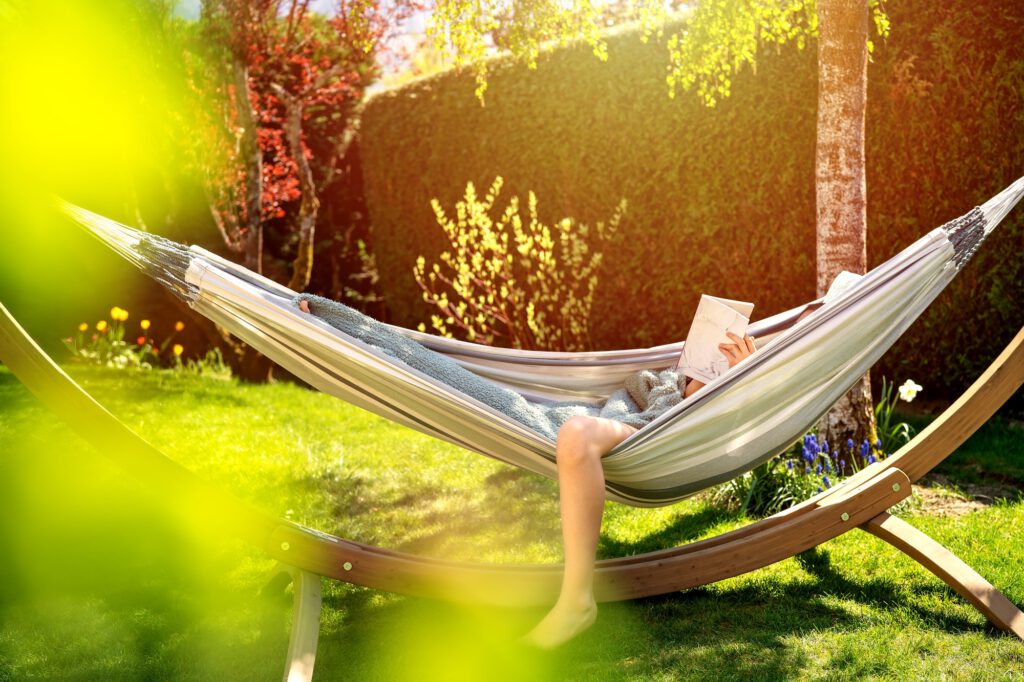
The term hammock comes from the Spanish word hamaca, which is related to a Haitian word for net. The hammock is thought to have originated in South America and was brought to Spain by Christopher Columbus after his voyage in 1492. The British Royal Navy used the canvas hammock as a bed on ships, and it was used in prisons in the 1800s as an experimental space-saving bed.
With the nice weather, in the garden or on the terrace, these hammocks can be used for rest. There are different types of hammocks, with different features and other things to consider. Understanding the differences will make it easy to choose the best type, according to individual wishes and comfort.

Types of Hammocks: How to Know Which One is Right for You
1. Rope hammock
A rope hammock is a classic example of comfortable and sturdy materials coming together to create what we all think of when we think of the word “hammock.” Rope is a great material because of its durability and weather resistance. If you accidentally leave a rope hammock out in the rain, it won’t be ruined the next morning. Rope is also great for its ability to roll up easily and save space. If you’re not going to use your hammock over the winter, this is a great option because it won’t take up too much space in your attic or garage.
2. Fabric hammock
If a rope hammock isn’t very comfortable, fabric might be a better option. A fabric hammock is soft and offers a bit more support than a rope hammock. Instead of a collection of strings, these fabric hammocks have no gaps and offer full, flat bedding. This is very common because it has a lot of utility and relaxation options, is very comfortable to sleep in, and is very easy to transport and set up.
This hammock is very compact and you only need two trees at the right distance to use it properly, using a rope or cord to wrap around them. This cord is usually quite long, so you can have a lot of options for placing the hammock, even if the trees are not very close together.
3. Hammock with support bar
It can be considered a difficulty to get in and out of the hammock, due to the flexibility of the support strings and the fact that they tighten up. One of the models that solves this problem is the one with a support bar that keeps the width of the hammock stretched. With such a bar, a hammock can maintain its shape, even when you lie in it, plus you don’t have to worry about needing help to get in and out of the hammock.
The support bar also makes the hammock more comfortable. It gives the fabric or rope a distinct shape and supports the back much more effectively than one without it. This hammock is probably the most commonly used; it is a traditional hammock, made of either polyester or cotton. A hammock with polyester rope is much more durable and resistant to mold. Cotton ones are more flexible, but they are not necessarily more comfortable.

4. Quilted hammock
This hammock is probably the second most common type of hammock among rope hammocks. The quilted hammock is preferred because it offers significant comfort and is also very aesthetically pleasing. The hammock is not a simple canvas; it is double, making it very good in colder environments, and it is soft and padded for the greatest possible relaxation. It is essentially like a quilted blanket and can offer the same luxury. Many people do not like these hammocks simply because of the material they are made of. They tend to be hard for the greatest resistance. Quilted hammocks are good for this.
5. Chair-type hammock
This hammock is a compact version of a hammock, where you don’t lie down; it offers the experience of a swing, making it a great option for relaxing in a sitting position. The hammock chair also has a backrest, making it great for people who need a little back support.
6. Hammock with stand
If you don’t have trees or poles to attach your hammock to, a hammock with a stand or support will come in handy, as it can support the weight of the hammock along with the person using it. A hammock with a stand is a great choice if you don’t want to be stuck with a hammock in one place. If you decide to move it, you can simply drag the stand wherever you want. Plus, you won’t have to worry about damaging the trees in the process.
A variation of these types of hammocks with a stand is the canopy hammock. For those who don’t want to expose themselves to the sun, this solution is ideal. Adding a canopy to the hammock stand solves this problem. Plus, you can even enjoy the hammock during a warm summer rain if you want. It’s a good way to have some of the comfort of indoors while still staying outdoors.

Types of hammocks depending on the place of occurrence
Sari hammock. It is an Indian hammock made of woven cotton, soft and usually incredibly colorful. If you want hammocks not only for relaxation but also to add a touch of color and style to your yard, these might be a good choice. Their colorful designs are a symbol of summer and relaxation and make a great accent piece for any lawn furniture set.
The Brazilian hammock. A unique choice, adorned with long, woven tassels, adding a touch of personality and opulence. Most models feature vertical striped prints, with any pattern adding a splash of color to your backyard design.
The Mayan hammock. It is woven in a diamond pattern, which is designed to flex with the body weight of the person sitting in it. It also has strong colors.
Nicaraguan hammock. This hammock is one of the most luxurious; it is decorated with tassels, like lace. It is handmade, but has a very high resistance and durability.
Relaxation hammocks are ideal if you want to laze in the shade of the trees in your own garden, on your balcony or terrace, or even inside the house, if you like original environments and space allows.

