


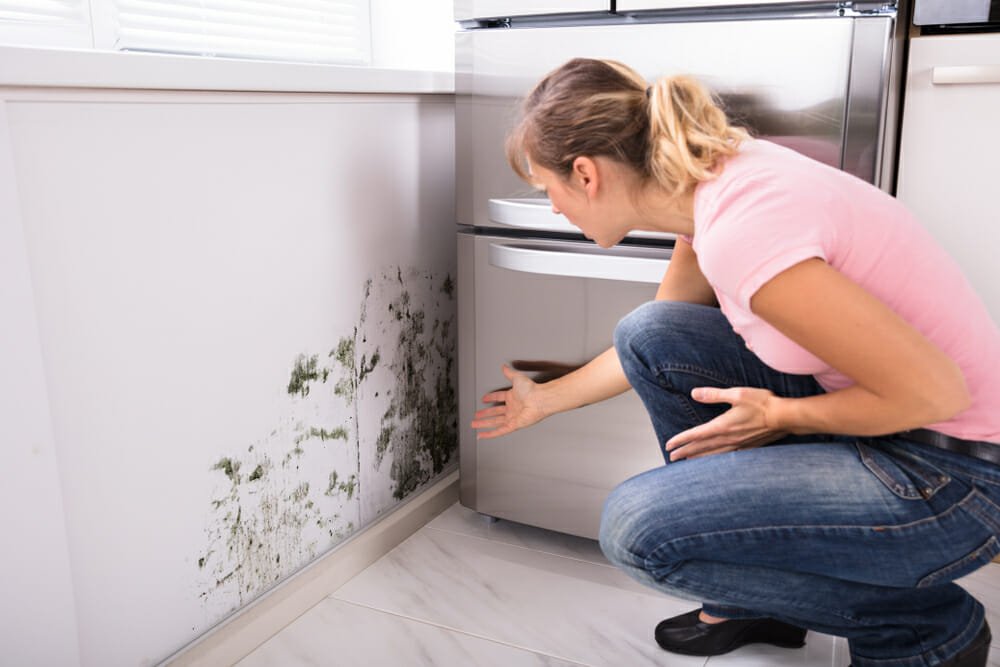
Mold that has appeared in your home is not a problem that you can ignore. It is unsightly, smelly, and can cause health problems. Often, no matter how careful we are about cleaning our home, it reappears again and again, affecting the entire environment of the house. The problem is how to get rid of mold and what solutions are available.

What is mold, and why does it appear?
Mold is a microscopic, parasitic fungus that multiplies through spores. Its appearance is primarily favored by moisture, heat, and darkness. Therefore, it will most often appear in the bathroom, kitchen, and also along walls that have not been properly plastered. Surely you have seen at least once a greenish or black mold stain, either in areas with high humidity or on food. Mold can appear both indoors and outdoors.
In order to grow, spores need moisture, and if you have mold on your walls, the first thing you need to do is eliminate the main cause of its appearance, moisture, from your home. You should know that mold that appears on food or outside does not have the same characteristics as indoor mold. There are over 150,000 species of mold in the world. The scientific names of the molds that are most often found in homes are:
- Cladosporium can grow in both low and high temperature conditions. It can appear on textiles and under parquet.
- Fusarium is a mold that can appear on food.
- Penicillium, as its name suggests, is the mold from which penicillin can be made, but that doesn’t mean it’s healthy for you to have in your home.
- Alternaria is one of the most common types of mold.
How and where does mold appear?
Mold spores are spread everywhere by the circulation of dry air. Mold occurs when spores settle on surfaces where there is moisture, but also a source of food for the fungus to grow. One of the factors that often causes mold to appear is dampness. This should not be confused with mold, as it simply means moisture accumulated in masonry walls, which can cause them to deteriorate. Mold grows very well in damp areas.
Mold can grow on almost any surface, from wood to plaster, from carpet to plastic, from glass to cement. Of course, some materials such as concrete, ceramics or plastic rarely favor mold growth.

How does mold affect health?
Your health can be affected in numerous ways after prolonged mold exposure, during which you have inhaled the spores, which is why it is also important to find out how to get rid of mold and take action early.
- Mold allergy is the most common problem. To develop such an allergy, your immune system must come into contact with allergens produced by mold and consider that substance a threat. You can develop such a reaction at any age. Symptoms of such a mold allergy include sneezing, nasal discharge, coughing, throat irritation and even breathing problems.
- Asthma is another condition caused by the presence of mold. It can occur in people who already have a mold allergy or who are more prone to developing respiratory diseases.
- Fungal infections of many types can be caused by molds. They can manifest in many ways, from skin irritations to digestive or respiratory system problems. Fungal infections can be especially serious in people with weakened immune systems.
How do you know you have mold, even if it’s not visible?
Fungi are not always visible. They can often hide behind furniture or even under the floor. The easiest way to detect “invisible” mold is by smell. The smell is similar to that of damp earth. Use this to help you identify the area where the mold has settled and eliminate the infestation.
Simple solutions to get rid of mold in affected spaces
Fortunately, this fungus can be removed with very little effort and with the right solutions. Before applying any of these methods, equip yourself with gloves and a protective mask to minimize the possibility of coming into contact with the spores. So, the solutions for how to get rid of mold are quite simple and handy.

- Sunlight. We’ve already established that mold needs moisture and darkness to thrive, so it’s no surprise that sunlight can do wonders for eliminating it. This method only works for light infestations and can only be applied to items that can be taken outside, so it won’t help if you have mold on your walls. If you have the space and the weather is warm and dry, try taking your furniture, rugs, or other textiles outside. Leave them in the sunlight for two to three days to air them out.
- Baking soda. You can either mix equal parts baking soda and water and spray it over the moldy areas or sprinkle baking soda granules directly over the mold if the infestation is only on a horizontal surface. This method is effective for cleaning wall finishes, carpets, and other textiles. Spraying the baking soda solution over the mold will need to be done two or three times to ensure that the fungus is eliminated.
- White vinegar. While it doesn’t kill every type of mold, it’s a very popular and inexpensive, natural solution that you can apply to any surface and material. The simplest solution you can make is one part water and one part vinegar. If you want to increase the effectiveness of the solution, you can add two tablespoons of baking soda and the juice of a squeezed lemon. This is probably the most powerful natural anti-mold solution you can make at home.
- Chlorine. If none of the above solutions work, all you have to do is mix a few measures of chlorine bleach with water and scrub the mold until it disappears. Chlorine can be used to remove heavy infestations from any surface. However, there is a risk that the substance will discolor textiles or stain furniture.
If none of the above solutions help solve your mold problem, it means the infestation is much deeper. You will need to purchase special mold cleaning products or call in professional disinfection companies.
You also need to consider the fact that, in rare cases, infestations can be so severe that you will only be able to repaint a wall or throw away furniture or textiles affected by mold.

