


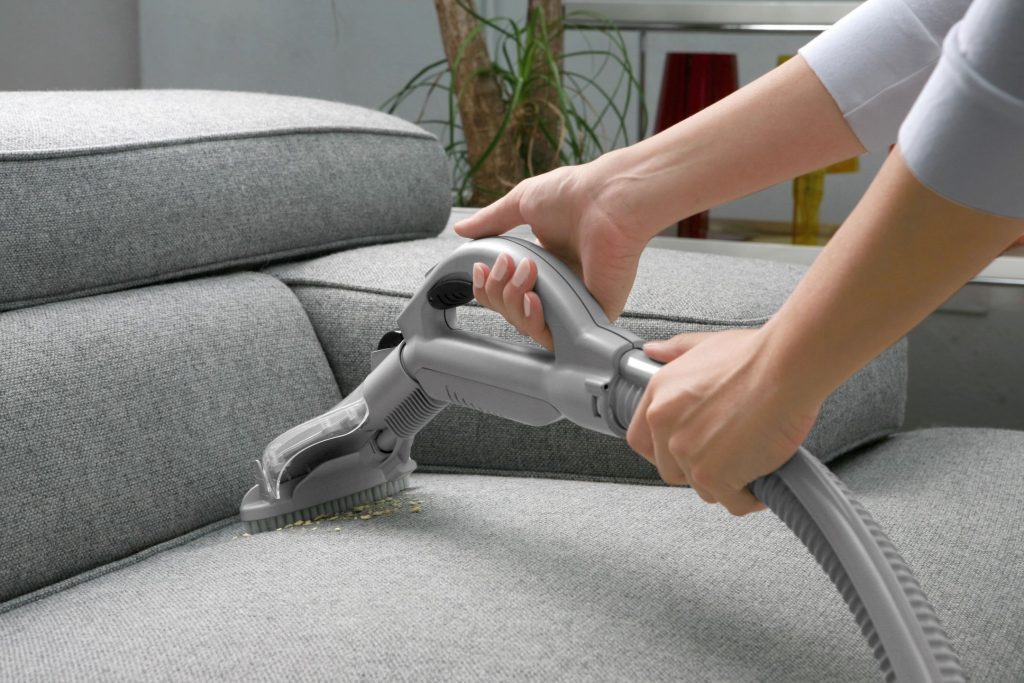
Upholstered furniture is very comfortable and gives a warm and welcoming feel, which is why it is very often used in almost all home decor, even though maintenance can become a problem over time.
Upholstered furniture, mainly represented by sofas, armchairs, and chairs, is an expensive purchase and therefore requires quality care to be used for a longer time. Even if the upholstery is vacuumed regularly, eventually the color will fade, losing its freshness.
Whether the upholstery is textile or leather, cleaning it can become a real chore, compared to other household chores, if you don’t use effective cleaning methods and solutions.
What material is upholstered furniture made of?
To clean upholstered furniture, first of all, we must determine the material used for the upholstery to establish the solutions that can be used, and especially to know which ones can cause damage. In principle, the materials used are natural leather with all its variants, eco-leather, and textile materials, natural, synthetic, or in various mixtures.

The documents of the purchased furniture pieces will certainly contain information about the upholstery material and general cleaning rules. For textile upholstery, the furniture manufacturer is obliged to attach a label to each upholstered furniture item, somewhere on the bottom and back, with information about the composition of the material. Depending on the label of the material from which the upholstery is made, the cleaning product will be chosen.
How do we clean upholstered furniture?
- Remove dust and pet hair by vacuuming furniture, as dust in contact with cleaning solutions can stain upholstery. Focus on areas of maximum contact, which are the most affected, and also in folds, where dust tends to collect.
- Then wash the wooden, metal, or plastic accessories, using special solutions for the respective material and microfiber cloths.
- A maintenance check is made of the mechanisms of the sofa or armchairs, if they are extendable or reclining. Structurally, it is not allowed to grease these mechanisms. The possible appearance of oil stains involves hastily wiping them with a dry cloth, so as not to collect dust and make the mechanism more difficult to operate.
- Clean stains, if any, with the solution required by the type of stain and upholstery material.
- The upholstery is cleaned according to its material.
Tricks for removing stains from upholstered furniture
Almost any stain on textiles can be removed without a trace. When preparing to clean upholstered furniture, it’s good to know a few very helpful tricks:
- The wax is removed using absorbent paper and an iron.
- Cover the chewing gum with ice cubes in a plastic bag, scrape it off with a blunt object, wipe it with a cloth soaked in ethyl alcohol, then dry the wet surface.
- Blot the coffee stain with a damp cloth with soapy water, then blot the excess moisture.
- The beer is cleaned with a cloth and a solution of white vinegar, one tablespoon of vinegar to one liter of water, then the excess moisture is dried.
- Blood stains are rinsed with cold water.
- Chocolate is cleaned with soap and water.
- Fruit juice is cleaned by applying a solution of a mixture of ammonia and vinegar, equal parts, or with white vinegar diluted with water, then drying the surface.
- The ink or lipstick is cleaned with acetone, rinsed with clean water, and then dried.
- For white wine stains, apply a solution of three-quarters methanol and one-quarter water, wash with water and mild soap, and dry.
- For red wine stains, immediately wipe off the liquid, put salt on the wet stain, and after the salt absorbs the wine, clean and dry.
- Grease stains are cleaned by applying absorbent paper towels or talcum powder to the stained surface, which you brush off after a few minutes, then clean with a sponge soaked in water and soap, finally drying the wet surface.
- For alcoholic beverages, dab with a white towel soaked in a mixture of two parts alcohol and one part white vinegar.
- Mold stains are removed with a solution of equal parts water and alcohol.
- The paint stain is first allowed to dry, and then the excess is removed with a blunt object. To remove the stain, use nail polish remover that does not contain acetone.
- The colors of upholstery can be refreshed with a solution of one part vinegar to two parts water.
- Unpleasant odors are removed with solutions based on vinegar, baking soda, or lemon juice, but also with solutions specially designed for cleaning textiles.

Cleaning restrictions for upholstered furniture
No matter what type of upholstered furniture we are talking about, cleaning agents should be colorless and tested first in a less visible corner.
- Do not use detergents with bleach,c, and do not dry the cleaned area with a hair dryer from the outside, but vice versa, thus preventing the formation of unsightly yellow stains when the fabric dries.
- Velvet will stain if spot cleaned, especially if it is an older piece of furniture that has been dusted. The material is easily cleaned with special textile solutions, but when spot cleaned, it may take on a different shade in the cleaned area, fresher and brighter than the rest. It needs to be cleaned on larger areas and is easily lost.
- Wool and wool fabrics should never be cleaned with hot water under any circumstances, as the material can absorb water and shrink.
- Microfiber is less demanding and dries very easily.
- In the case of other textiles, cleaning methods may vary depending on color and fiber percentages, and you can usually find specifications in this regard on the label.
- Eco-leather is easy to maintain and does not stain, unlike natural leather, which is more permeable and sensitive even to contact with water. However, it is sensitive to high temperatures, like synthetic textiles, but also to alcohol-based solvents or other organic solvents.
Cleaning different upholstery
Leather upholstery
- Clean weekly with a soft cloth soaked in water with liquid soap to remove dust and dirt stains.
- If the upholstery is made of natural leather, a hand cream with lanolin can be used.
- Organic leather is cleaned very well with cleansing milk.
- Abrasive textile materials that can scratch the skin are not used.
- If something is spilled on it, the sofa should be allowed to dry. To remove water or other water-soluble substances such as tea, coffee, milk, juices, and others, use a dry towel, and then let it dry completely. After that, a leather cream should be used.
- In the case of difficult stains, cleaning solutions are used, but they are first tested in an area that is not in sight.

Textile upholstery
- Stains must be treated promptly, without delay.
- Solid dirt is easily removed without rubbing.
- The cleaning product will be chosen based on the label of the material the upholstery is made of.
- In the case of grease stains, sprinkle salt over the stain, wait for the salt to soak in, then remove it with a clothes brush. Wash the fabric if the stain has not disappeared with upholstery detergent. The salt has the effect of removing grease but also of refreshing the colors of the upholstery.
- Upholstery rubbed lightly with a solution of one cup of white vinegar to two liters of water will refresh the colors.

