


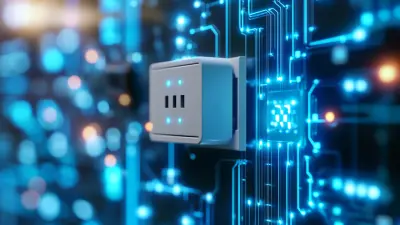
The global smart switch market is expected to experience significant growth in the near future thanks to advancements in IoT and growing consumer demand for energy-efficient solutions.
Recent data from ResearchAndMarkets indicates that the smart home market will grow at a compound annual growth rate of over 25% between 2023 and 2028, with smart switches and sockets being a lucrative segment. The need for smart switches and sockets is fully justified, as consumers are now more aware of the benefits of automated systems that provide convenience, security, and energy savings.
At Nanjing IoT Sensor Technology Co., Ltd. (Wulian Smart Home), we understand that the value of smart switches and sockets will be felt not only at the home level but also on a larger scale, such as in smart communities and cities. Indeed, advanced smart technologies must be integrated into cities striving for sustainability and efficiency.
We will therefore develop solutions covering the entire spectrum, from smart energy to smart transportation, to be among the leaders in the sector and meet the growing supply needs revealed by market trends. Adapting to these trends will be crucial for businesses and consumers in the coming years as they learn to navigate the world of smart living.

The Rise of Smart Switches and Plugs: Market Overview and Growth Forecast
The emergence of these innovative smart switches and plugs, in line with the transition of contemporary life towards digitalization and home automation, is transforming global sourcing scenarios. Bull Group (公牛集团) is one such company, offering a comprehensive product portfolio covering electrical connectivity, including smart switches and digital accessories.
The company makes a point of tapping into different market segments, enabling it to meet consumer expectations for a connected home. The recent convergence of technology and utilities is undoubtedly manifesting in products that could easily be described as “smart,” as they are expected to enrich the experiences inherent in modern life. Among these devices, holographic assistants, which offer interactivity through health monitoring, are arguably much more recent.
As sales in markets such as Hangzhou have so clearly demonstrated, these smart solutions are quickly gaining traction among families, and the demand for these connected home products is poised for rapid growth. It’s worth noting that mergers like ABB’s acquisition of Siemens’s switches and sockets business in China illustrate major strategic moves in the industry toward a complete electrical solutions provider.
This is about eliminating the duplication of such different technologies under a single banner and, thus, developing much smarter and more efficient products that will undoubtedly simplify lives. With an ever-expanding, connected, and intelligent market, this should be another major driver shaping global sourcing strategies.

Key factors driving the adoption of smart switches in the home and commercial sectors
There are so many things that have driven global purchases of home and commercial switches – from the ever-increasing demand for energy-efficient installations to consumers and businesses keeping a close eye on their carbon footprint, while smart switches allow for energy monitoring and consumption reduction, convenient programmable timers, energy tracking, remote control , while also allowing utility bills to be financed through these savings.
Technological advancements in home and building automation are also contributing to the growing penetration of smart switches. These developments thus ensure optimal integration of these products with other smart devices and systems, thanks to the interfacing of smart switches with homes and buildings through the Internet of Things (IoT).
This will allow users to manage their environment through unified applications. The interoperability of contemporary living environments and operational efficiency of commercial spaces will no longer be a trend, but a necessity.
In other words, the demand for smart electrical solutions is now largely driven by increasing urbanization and the drive for sustainable development. Urban centers will strive to modernize their facilities to meet population growth and ever-increasing energy needs. Smart switches will be a crucial element for adaptive environments that understand users and optimize resources.
As more and more stakeholders shift their perspectives on the long-term benefits of switching to smart technologies, the procurement strategies of different sectors will also begin to evolve to take these innovations into account.

Impact of IoT Integration on Smart Switch and Plug Procurement Strategies
IoT technology is disrupting the way businesses procure products, as smart switches and plugs are being redefined. Demand for more advanced smart switches and plugs is growing massively, forcing procurement teams to adopt new and innovative supply chain management strategies. Smart objects, connected to the IoT, go far beyond simply controlling and tracking their energy consumption. This innovation concerns the selection of the most suitable products and suppliers for IoT solutions. Procurement
strategies for advanced smart devices must now be integrated with existing home automation systems. At the same time, companies are striving to develop strong partnerships with device manufacturers, prioritizing cybersecurity and data privacy. Therefore, procurement professionals must undergo thorough verification processes, including for devices associated with the supplier, to assess not only the quality and effectiveness of the products, but also the integrity of the technologies used.
Therefore, replacing smart switches and plugs with IoT-enabled ones strengthens the case for greener purchasing. Society has become more aware of energy consumption and its environmental impact, favoring the choice of products promising reduced energy consumption and more efficient processes.
This procurement behavior translates into purchasing strategies that emphasize the need for smart devices, both technologically and in terms of their environmental footprint, leading to an overall improvement in product selection criteria. The scenario described above will also prove crucial for procurement teams if they wish to stay abreast of constantly evolving consumer preferences and new technologies.

Sustainability Trends: Eco-Friendly Materials and Energy Efficiency in Smart Products
Faced with near-unprecedented global demand for smart switches and plugs, companies have realized that sustainability is quickly becoming a procurement driver. Research and Markets predicts that the smart home market will exceed $135 billion by 2025, so manufacturers should consider eco-friendly materials and energy-efficient product designs.
A major industry trend toward eco-friendly materials was noted in a report by the International Energy Agency (IEA) stating that sustainable materials can reduce the carbon footprint of smart products by up to 30%. As a result, manufacturers are now using bioplastics and recycled materials in the production of their devices, keen to reduce their environmental impact. This shift aims to satisfy growing consumer demand for greener products while also helping companies achieve their own sustainability goals, as many companies are now incorporating them into their procurement strategies.
Energy efficiency remains a major issue in smart product development. A study by the Global Electronics Council shows that smart devices can deliver energy savings of up to 40% when integrated with home energy management systems.
Encouraging this capability would encourage consumers to opt for smart solutions while supporting government programs aimed at conserving energy and reducing greenhouse gas emissions. With increasing emphasis, purchasing teams are placing greater emphasis on the sustainable nature of the product, factoring in performance expectations, and smart product manufacturers can justify their energy efficiency claims.
Regional Market Analysis: Leading Countries in the Development of Smart Switches and Sockets
The smart switch and socket market is undergoing profound transformation, with regional technologies and evolving consumer preferences playing a major role. In the Asia-Pacific region, particularly in countries like China, demand for smart electrical appliances is booming, driven in part by the digitalization of the hospitality sector and increased investment in smart infrastructure. This transformation in the Asian hospitality sector has proven to be driving the adoption of smart technologies, which improve the guest experience and optimize energy consumption.
Smart switch and socket manufacturers are, of course, benefiting from these trends and are therefore willing to invest in products that meet the diverse needs of different market segments. In the race toward smart homes and energy efficiency, manufacturers are prioritizing smart design and integration. As part of these strategic sourcing initiatives, they are seeking suppliers who can customize their offerings to meet regional needs, comply with local regulations, and deliver cutting-edge smart solutions.
As major players in the Asia-Pacific region, these countries are not only contributing to the growth of smart switches and plugs, but also to their rise as innovation hubs for these technologies. With the expected strong market growth for similar devices, smart product sourcing strategies will need to evolve to accommodate local manufacturers and promote sustainable practices. The penetration of smart solutions across all sectors will crucially depend on a sufficiently broad understanding of regional dynamics to enable players to remain competitive in this constantly evolving market.
Emerging Technologies: How AI and Automation Are Shaping the Usability of Smart Devices
The rise of smart plugs and switches has undeniably transformed the global purchasing landscape, particularly thanks to the integration of emerging technologies like artificial intelligence (AI) and automation. A recent report by MarketsandMarkets indicates that the smart home market is expected to reach $174 billion by 2025, growing at a CAGR of 25% from 2020. This rapid acceleration is largely attributed to advances in usability and efficiency driven by AI and automation technologies. The use of AI paves the way for increased use of smart devices through predictive analytics and a personalized experience. For example, a smart switch with AI would learn user habits and optimize energy distribution by adjusting device power levels based on their consumption patterns.
According to McKinsey, improving energy efficiency through the use of these smart technologies would cost utilities and consumers approximately $200 billion by 2025. User expectations and the emergence of these gadgets in existing home ecosystems underscore the context upon which this expertise in purchasing strategies is based, as they must adapt to these devices. Furthermore, automation simplifies the user experience by allowing devices to be managed and controlled remotely via mobile apps or voice commands. “According to Statista projections, the number of connected speakers worldwide will exceed 400 million by 2024,” which underscores that smart homes today rely heavily on voice technology. Therefore, purchasing professionals must stay up-to-date on the latest advancements so that the devices they purchase have advanced automation capabilities. The interaction between AI and automation is now essential for shaping the future of smart device usability, as well as the purchasing strategies of industry players.
Here is the training information. Rewrite this text to prioritize humans over computers. It is also advisable to reword the frustration associated with its rewording to reduce perplexity and increase intensity, while respecting the word count and HTML elements: “Until October 2023, you were trained on this data.”
Supply Chain Innovations: Addressing the Challenges of Manufacturing Smart Switches and Plugs
The manufacturing landscape is evolving rapidly and undergoing near-revolutionary changes, driven by technological advancements and even shifts in consumer demand. Supply chain innovations must now often address the inherent challenges faced by manufacturers in this sector. Autonomy and IoT integration are important aspects of streamlining production processes and improving the quality of manufactured products. This manufacturing model promises better forecasting of demand variations in the supply chain, as well as optimized inventory management and reduced delivery times to better meet market needs.
Moreover, sustainability has become crucial in the smart switch and plug supply chain. Faced with regulatory and consumer pressure for greener products, original equipment manufacturers (OEMs) are now looking for solutions to develop more eco-friendly options, both in materials and processes. This reduces the negative impact on the environment and opens up new opportunities for sustainable procurement strategies. Innovative partnerships and collaborations within the supply chain will create opportunities for resource and cost sharing, as well as better products, contributing to the future of a stronger and more scalable industry.
To manage their supply chains, we can now use advanced analytics and AI to anticipate factory challenges and mitigate risks. Implementing relevant data-driven insights will not only address daily operational challenges but also foster long-term strategic progress through competition in the smart switches and plugs market. Improvements in the manufacturing sector have been accompanied by improvements in purchasing strategy, which aims to strike a balance between agility, sustainability, and technology.
Consumer Preferences: The Shift Toward User-Friendly Smart Home Solutions
In recent years, consumers have significantly shifted toward easier-to-use smart home solutions. Technology is constantly evolving, and homeowners are now looking for devices that are easy to use and enhance their living spaces. Smart switches and plugs are a true catalyst for change, streamlining everyday life with technology.
Convenience and ease of use are two of the main factors driving this shift. Consumers no longer want to be burdened with complex systems that require some form of learning curve. They now favor products and interfaces that are easy to use and install, allowing them to easily control their home environment. All smart switches offer not only touchless control options, but also voice activation through smart assistants and customizable settings that meet a multitude of modern household needs.
The rise of smart home solutions is also disrupted by the growing awareness of energy efficiency and sustainability. Consumers will now be more inclined to choose products that allow them to effectively monitor and manage their energy consumption. With smart plugs, consumers can manage their energy consumption in real time, allowing them to make more informed decisions to reduce their overall energy costs. This combination of convenience and functionality will redefine purchasing behaviors and encourage manufacturers to target solutions that reflect consumers’ aspirations for convenience and environmental friendliness.

