


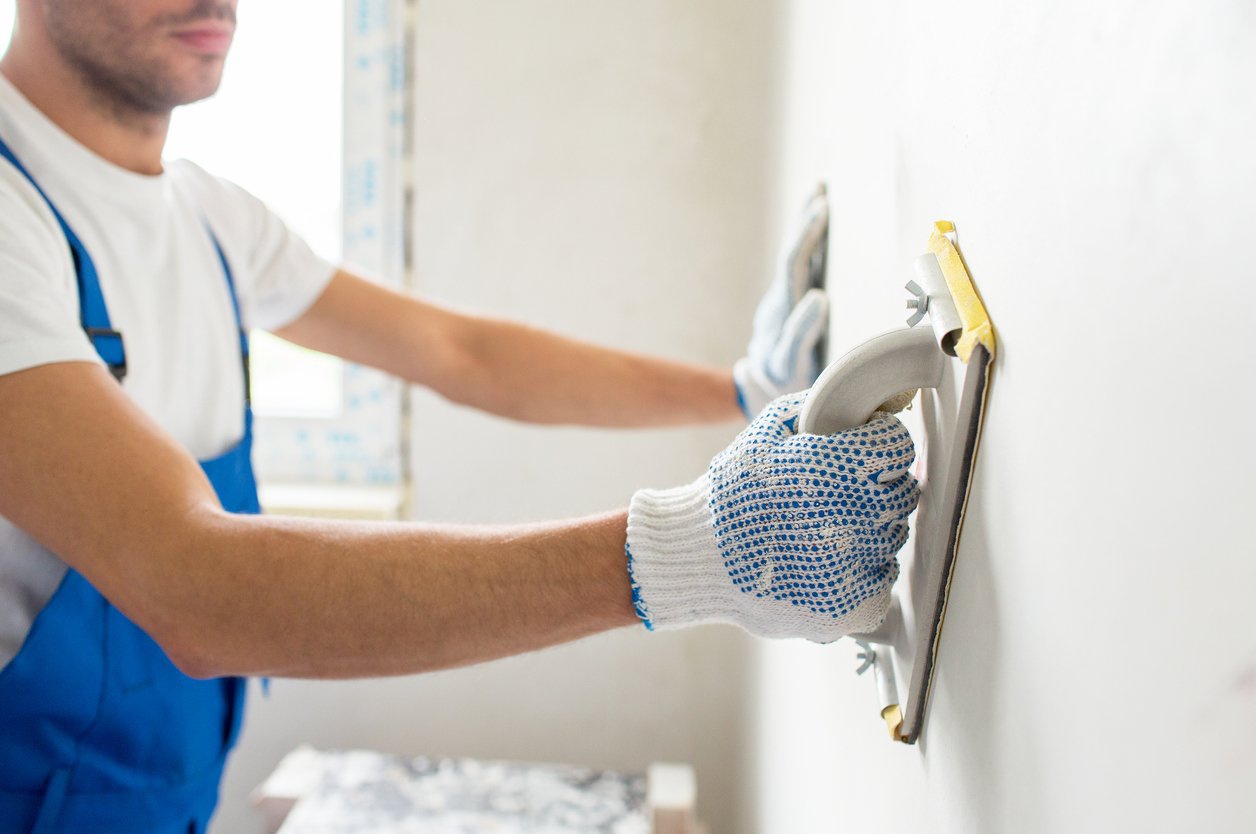
Whether it is a new house or a renovated one, the walls and ceilings must be beautifully finished, to present a perfectly flat surface, like a “sheet of paper”, as they often say, without bumps or other asperities. On such a wall it will be possible to paint or wallpaper with very good results. Such a finish is the result of the correct operation for plastering the walls.
What does plastering walls mean?
The purpose of the wall plastering procedure is to prepare the surfaces of the walls and ceiling, smoothing them before the final stage of painting or wallpapering.
The wall plastering process refers to the application of a visible, but very thin layer, maximum 10 mm, of material, in order to smooth surfaces. Depending on the purpose for which it is used, there are several types of plaster, namely:
- Leveling putty – used when the surface is not smooth and more material is needed to bring it to the same level. The thickness is between 2 and 10 mm.
- Finishing putty j – is the layer that is applied at the end, preparing the surface for subsequent operations, such as painting or wallpapering, with a maximum thickness of 2 mm.

What are the main characteristics of the putty?
To obtain a professional putty, you must consider the following characteristics:
- The practical aspect matters the most, its role being to smooth walls and ceilings. It must have a finished appearance and not show any unevenness and have a somewhat uniform color.
- Stress resistance and lifespan depend on the preparation and application of the plaster. The proportions of the materials used in the wall plastering mixture must be strictly observed in order to be resistant to mechanical stress and reduce the risk of cracks in the wall.
- The adhesion of the putty to the wall or ceiling must be very good. Repairs are much more difficult to make if the putty falls off and, most often, it is necessary to completely remove it from the wall and re-plaster the walls from scratch.
Types of wall putty
There are many types of putty on the current market, depending on the components, each with its own properties:
- Cement-based putty , despite its rough appearance, can be used both for finishing facades and interior walls and ceilings. It is a putty with high resistance to moisture.
- Gypsum-based putty is often used. It is very easy to apply. It gives a smooth and even appearance. This putty should be avoided in areas with high humidity, such as bathrooms, kitchens or basements. Gypsum putty may require sanding for a very good finish, which can increase labor costs.
- Lime and gypsum-based putty is a moisture-resistant putty, most often not involving sanding. In addition, it is a putty that has mold-fighting properties.
- Synthetic finishing putty is perhaps the most effective material, and can be used in any plastering work. This type of putty is known for its flexibility, but also elasticity, and moisture resistance. It can be used for finishing very difficult surfaces. This putty has 4 levels of finish, to guide you in making a good choice for plastering walls or even plastering old walls.

What you need for plastering walls
Keep in mind that each manufacturer has a written recipe for preparation, as well as a certain amount of surface to be covered, so you can easily calculate the amount needed for plastering. In addition to the plaster chosen according to the type of work to be done, you will also need a few materials and tools:
- Primer putty – which is applied beforehand to prepare the surface.
- Bucket or other container in which to prepare the grout.
- A mixer for mixing the putty.
- A scoop with which you can scoop small amounts of material from the bucket.
- To spread the material well, you also need a trowel, preferably made of stainless steel.
- A putty knife with which you can scrape away imperfections.
- Primer roller.
- Sandpaper if necessary, to finish the surface.
- To apply plaster to the ceiling you also need a ladder, as well as safety glasses.
What is the correct procedure for applying putty?
Step 1. The operation of plastering walls and ceilings begins with the preparation of the surfaces and for this it is necessary to comply with the following requirements:
- Protective foil is applied to the floor and door and window frames, if applicable.
- The supporting surfaces, i.e. the walls and ceiling, are smooth and free of dust or dirt.
- If the walls have been painted, dampen them with a brush and scrape them with a putty knife.
- Repair any imperfections, such as holes, scratches, bumps, etc.
- Apply the primer to the entire surface on which the wall plastering operation is to be performed.
- Ideally, surface preparation should be done 24 hours before applying the putty, to allow dust to settle.

Step 2. The preparation of the screed must be done in compliance with the proportions recommended by the manufacturer’s technical sheet. It is advisable that the materials be recently purchased, without having to be stored in conditions that allow them to degrade.
The grout is always prepared in clean containers, as follows:
- First pour the recommended amount of water into the container in which the mixture is made.
- Add the amount of material recommended by the manufacturer and allow to absorb the water. Do not start mixing immediately. Without proper hydration, lumps may form.
- Once the water is absorbed, it is mixed with a special mixer until a homogeneous consistency is obtained.
- Preparation immediately precedes the wall plastering operation, to prevent the plaster from hardening.
Step 3. The application of the putty is done on the support surfaces in a thick layer. It is very important to understand that the putty dries very quickly and that is why you will have to level the surfaces right at the time of application. Before proceeding to the application of the final layer of putty, the room will be ventilated to allow the walls to dry evenly.
For a smooth smoothing in one hand, it is advisable, regardless of the chosen putty, to add 10 to 15% more water, so that the putty is much softer. A roller is used for application, which is loaded directly from the bucket with up to 1.5 kg of putty.
Leveling will be done with a professional trowel, i.e. lightweight, with flexible blades and an ergonomic handle. Such a trowel will load the wall where needed and spread the material where it needs to be.

