


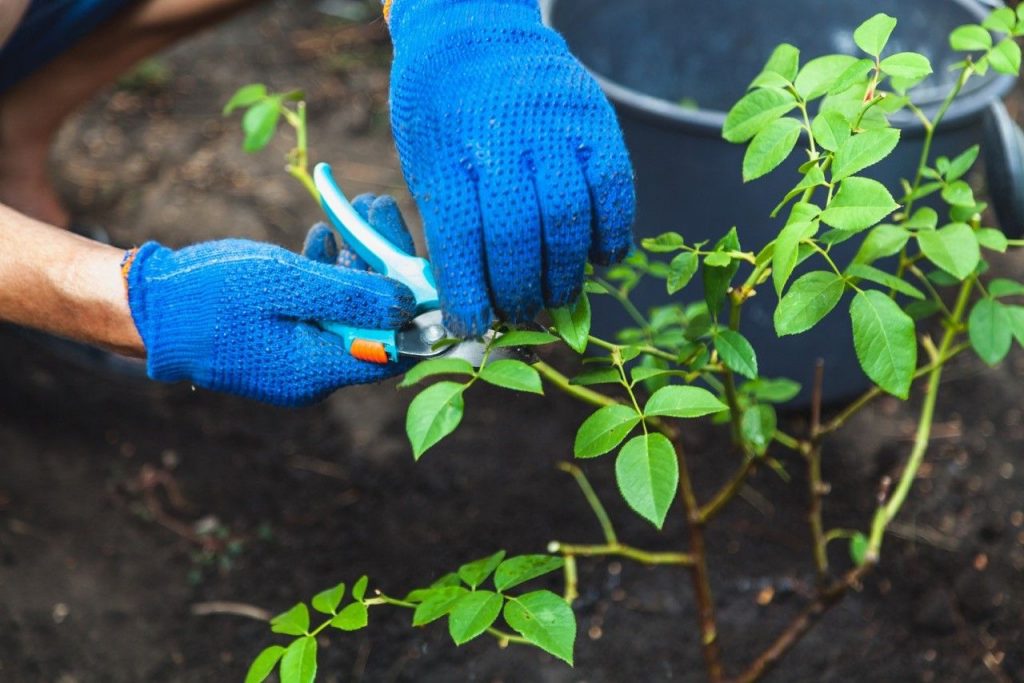
Rose gardens are perhaps the most beautiful recreational spaces for those who own a house with a yard. Caring for roses in the garden can make any yard, no matter how small, a real success, through the color and texture of the flowers. Roses are among the most popular and beloved garden flowers. If the care of roses is done properly, they will give us many flowers, beautifully colored and fragrant.
There is a rose for every spot in the garden that will add charm and sparkle, whether it is a climbing species over a fence, over a shed, another variety planted in a wheelbarrow or a fragrant and colourful bush lined along a driveway. Planting roses is a pleasant and fun way to add colour, fragrance and beauty to the garden.
Usually, caring for roses means pruning and grooming them in late fall and spring, but there is also an intermediate stage that means caring for roses in summer. This stage of how to care for roses in summer is not mandatory, but it is more than welcome because it will give new impetus to the roses and you will be able to enjoy a new explosion of flowers, after the one in May.
What we need to know about roses
Roses are shrubs that reach heights of over 2 meters, with single or double flowers, in various colors. They can be planted in spring, after the frost has passed, or in autumn, in groups, for a mass of color, or individually.
- Most roses are grafted onto rose hips, meaning the plant has rose hip roots in the soil.
- Garden roses prefer well-drained and fertile soils, rich in organic matter.
- Roses should be fertilized sometime after the first and second blooms. It’s a good idea to dig up the soil a little at the roots and remove any weeds that might suffocate them.
- If they have pests, they must be removed and the bushes treated.
- Rose pruning can be done in spring or fall, but not in the first 2-3 years after planting.
- Pruning is essential in the process of caring for roses in the summer. If you have old, sick or failing bushes, June is the perfect month for a radical approach. Completely cut off all the branches, dig the soil well, fertilize the stump and water it abundantly. In about two weeks they will give new shoots, which are the starting point for a new, completely regenerated rose bush.
- Once a week, cut off the spent flower buds. Check that they are healthy and strong, and air out the bush so that the roses have a “spur” for regeneration, which means new flowers.

Rose care guide
We will present the most important works on how to care for roses , what needs to be done over the course of a year, from spring until late autumn, when frost comes, in chronological order, so that your rose garden is healthy and blooms all summer.
1. Beginning of the season
March
After the soil thaws, rose cuttings can be planted, which are immediately covered with a mound of crushed earth, to protect the plant from the risk of dehydration caused by the dry spring wind. The shoots will emerge from the mound on their own, fortified and ready to bloom.
Fertilizers will be administered. Nitrogen to stimulate vegetative growth, about 60 g/m2, phosphorus and potassium, so that the plant has large, intensely colored and fragrant flowers, about 30 g/m2. If the soil was fertilized with good quality compost or manure in the fall, chemical fertilization is no longer necessary.
At the end of the month, after the frosts have passed, the cuttings can be made.
April
Continue pruning, if not done in March due to frosty weather.
When pruning, make sure the plants have enough space and don’t suffocate each other.
If it’s hot, weeds can grow vigorously. They need to be weeded because they steal water and minerals from the soil. The soil around the bushes should be kept free of weeds all summer.
2. As many flowers as possible
May
The end of the month coincides with the onset of the first wave of flowering, which is the most spectacular.
If the month is dry, the roses must be watered abundantly, once every two weeks, so that the plant can produce quality flowers.

June
This month, the first flowering continues in full swing.
Also now, the attack of diseases and pests can be very aggressive. Remove pests caught on the plants. Tear off and destroy by burning the leaves affected by diseases.
At the end of the flowering period, remove the spent flowers to prevent fruiting and thus stimulate new flowering. After removing the spent flower stalks, water abundantly.
Around the middle of this month, a new dose of nitrogen is administered, 60 g/m2. If it is in the form of granules, the nitrogen must be incorporated into the soil and the plant watered well, to promote dissolution. Nitrogen that is not properly dissolved causes plant burns.
July
The wilted flowers are constantly removed.
Roses with a single bloom can be shortened if they have grown too large and there is a risk of breaking. In the case of climbing roses, the new growth is fixed to the support.
After July 15, no more nitrogen fertilizer is administered. The growth encouraged by the fertilizer will be too raw to survive the winter and may endanger the entire plant.
3. Preparing for winter
August:
Apply 30-40 g/m2 of phosphorus and magnesium fertilizer to stimulate wood maturation, which means increasing frost resistance.
October – November
After the first frost and the leaves fall, the branches of the rose bushes are shortened by a third to prevent them from breaking under the weight of the snow. Larger bushes can be tied around with a tie.
The last part of October and November is the best time of year to plant new roses. If you want to relocate a bush, now is also the ideal time.
In November, you can add compost or well-rotted manure to the roses.
A 20-30 cm mound of soil is made over the bushes to prevent frostbite.
Climbing roses are protected by gathering the branches in bundles, wrapping them in burlap, fixing them to the ground, and adding 20 to 25 cm of crushed soil on top.
Caring for roses in the garden can make any yard, no matter how small, a real success, through the color and texture of the flowers. Roses are among the most popular and beloved garden flowers. If the care of roses is done properly, they will give us many flowers, beautifully colored and fragrant.
There is a rose for every spot in the garden that will add charm and sparkle, whether it is a climbing species over a fence, over a shed, another variety planted in a wheelbarrow or a fragrant and colourful bush lined along a driveway. Planting roses is a pleasant and fun way to add colour, fragrance and beauty to the garden.
Usually, caring for roses means pruning and grooming them in late fall and spring, but there is also an intermediate stage that means caring for roses in summer. This stage of how to care for roses in summer is not mandatory, but it is more than welcome because it will give new impetus to the roses and you will be able to enjoy a new explosion of flowers, after the one in May.
What we need to know about roses
Roses are shrubs that reach heights of over 2 meters, with single or double flowers, in various colors. They can be planted in spring, after the frost has passed, or in autumn, in groups, for a mass of color, or individually.
- Most roses are grafted onto rose hips, meaning the plant has rose hip roots in the soil.
- Garden roses prefer well-drained and fertile soils, rich in organic matter.
- Roses should be fertilized sometime after the first and second blooms. It’s a good idea to dig up the soil a little at the roots and remove any weeds that might suffocate them.
- If they have pests, they must be removed and the bushes treated.
- Rose pruning can be done in spring or fall, but not in the first 2-3 years after planting.
- Pruning is essential in the process of caring for roses in the summer. If you have old, sick or failing bushes, June is the perfect month for a radical approach. Completely cut off all the branches, dig the soil well, fertilize the stump and water it abundantly. In about two weeks they will give new shoots, which are the starting point for a new, completely regenerated rose bush.
- Once a week, cut off the spent flower buds. Check that they are healthy and strong, and air out the bush so that the roses have a “spur” for regeneration, which means new flowers.
Rose care guide
We will present the most important works on how to care for roses, what needs to be done over the course of a year, from spring until late autumn, when frost comes, in chronological order, so that your rose garden is healthy and blooms all summer.
1. Beginning of the season
March
After the soil thaws, rose cuttings can be planted, which are immediately covered with a mound of crushed earth to protect the plant from the risk of dehydration caused by the dry spring wind. The shoots will emerge from the mound on their own, fortified and ready to bloom.
Fertilizers will be administered. Nitrogen to stimulate vegetative growth, about 60 g/m2, phosphorus and potassium, so that the plant has large, intensely colored and fragrant flowers, about 30 g/m2. If the soil was fertilized with good-quality compost or manure in the fall, chemical fertilization is no longer necessary.
At the end of the month, after the frosts have passed, the cuttings can be made.
April
Continue pruning, if not done in March due to frosty weather.
When pruning, make sure the plants have enough space and don’t suffocate each other.
If it’s hot, weeds can grow vigorously. They need to be weeded because they steal water and minerals from the soil. The soil around the bushes should be kept free of weeds all summer.
2. As many flowers as possible
May
The end of the month coincides with the onset of the first wave of flowering, which is the most spectacular.
If the month is dry, the roses must be watered abundantly, once every two weeks, so that the plant can produce quality flowers.
June
This month, the first flowering continues in full swing.
Also now, the attack of diseases and pests can be very aggressive. Remove pests caught on the plants. Tear off and destroy by burning the leaves affected by diseases.
At the end of the flowering period, remove the spent flowers to prevent fruiting and thus stimulate new flowering. After removing the spent flower stalks, water abundantly.
Around the middle of this month, a new dose of nitrogen is administered, 60 g/m2. If it is in the form of granules, the nitrogen must be incorporated into the soil and the plant watered well, to promote dissolution. Nitrogen that is not properly dissolved causes plant burns.
July
The wilted flowers are constantly removed.
Roses with a single bloom can be shortened if they have grown too large and there is a risk of breaking. In the case of climbing roses, the new growth is fixed to the support.
After July 15, no more nitrogen fertilizer is administered. The growth encouraged by the fertilizer will be too raw to survive the winter and may endanger the entire plant.
3. Preparing for winter
August:
Apply 30-40 g/m2 of phosphorus and magnesium fertilizer to stimulate wood maturation, which means increasing frost resistance.
October – November
After the first frost and the leaves fall, the branches of the rose bushes are shortened by a third to prevent them from breaking under the weight of the snow. Larger bushes can be tied around with a tie.
The last part of October and November is the best time of year to plant new roses. If you want to change the location of a bush, now is also the right time.
In November, you can add compost or well-rotted manure to the roses.
A 20-30 cm mound of soil is made over the bushes to prevent frostbite.
Climbing roses are protected by gathering the branches in bundles, wrapping them in burlap, fixing them to the ground, and adding 20 to 25 cm of crushed soil on top.

