


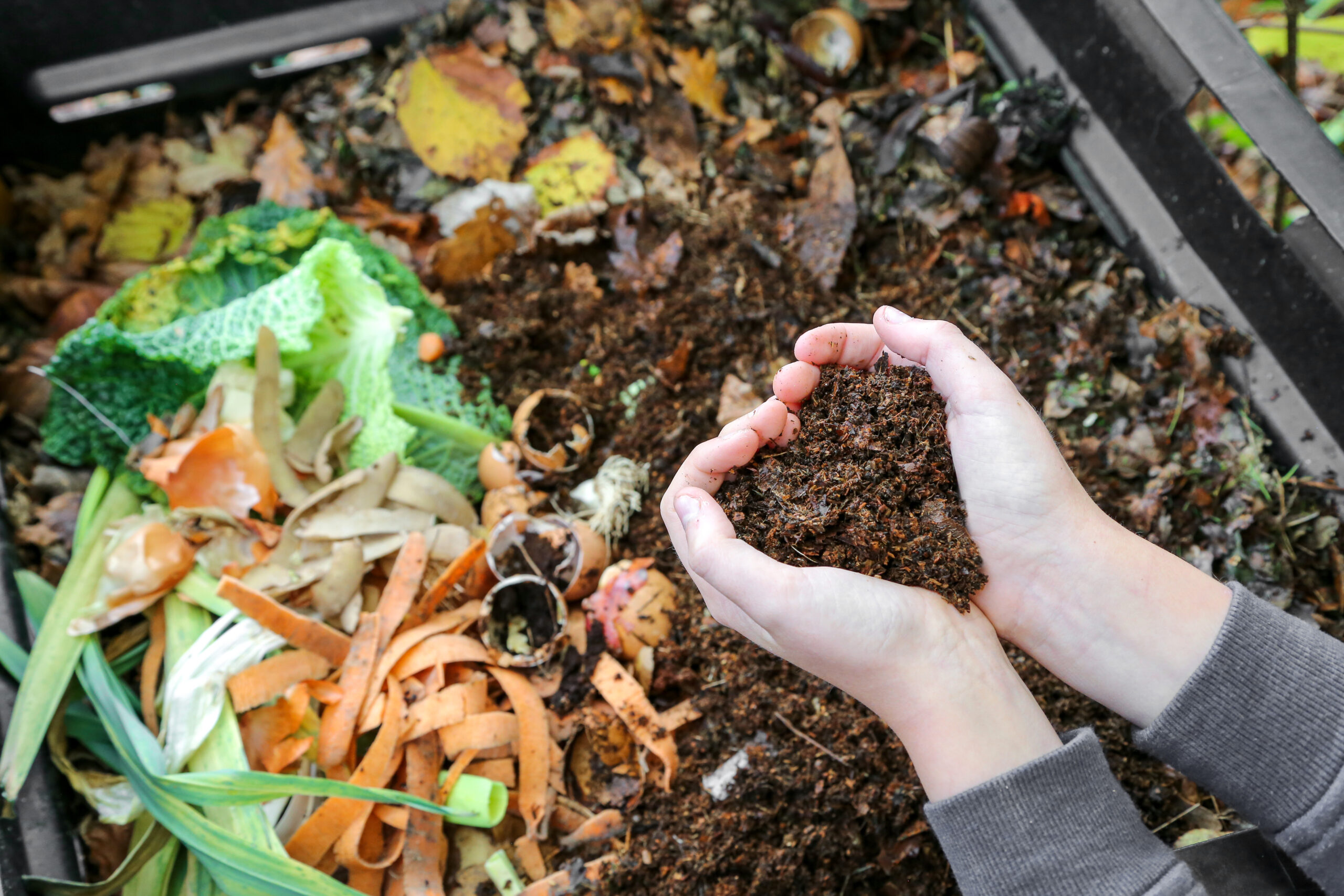
Vigorous plants and rich harvests are good results that you will always get when you invest time and money in your garden soil, and it will be well-fertilized. You can fertilize your garden or houseplants with food scraps.
When you have and use yard or kitchen scraps, you will get compost, and the result of using this fertilizer will be twice as good. Of course, you can always buy ready-made, organic compost from specialized stores, because it is quite cheap. On the other hand, it is easy enough to make your own compost with the materials you have on hand and the right equipment.

What is compost?
A natural agricultural fertilizer, resulting from the slow fermentation of various plant and animal waste, mixed with some mineral substances, is called compost . Waste from household and gardening activities can be recycled into compost, an easy-to-apply and inexpensive method, providing all the resources you need to fertilize the soil with organic matter.
Materials you can use for compost include nitrogen-rich materials, such as plants and flowers, eggshells, vegetable and fruit scraps, bread, coffee grounds, and tea scraps. Carbon-rich materials include branches, wood chips, paper, cardboard, nut shells, rice, dried leaves, and hair.
Never put plastic, fried foods or foods that have come into contact with oil, glass, metal, and cosmetic or pharmaceutical waste in the compost , because they pollute the environment.
Essential elements for perfect compost
Unlike weeding or double digging, operations that require time and physical effort, how to make compost is a trivial operation , the compost pile almost maintains itself, if done correctly and you will definitely achieve the expected result.
- A container is chosen.
We will be dealing with decomposing organic material, so we don’t need anything fancy. The only requirement for this container is that it holds all the ingredients together so that the beneficial bacteria that break down the matter can work efficiently. Compost bins come in static and rotating types. Both types require that their entire contents be turned periodically to oxygenate and mix the decomposing materials. Stationary bins can be well-ventilated wire cages or wooden crates. A well-designed container will retain heat and moisture, allowing for quick results.
Rotating containers are containers that are easy to turn and that speed up the decomposition process, their secret being frequent infusions of oxygen and heat retention. The choice of a container will be made depending on the amount of existing material, grass, leaves, weeds and stems from the previous year, how much space you have available in the garden and how quickly you need the final product. Regardless of the container, whether it is a static or rotating container, it is preferable to place it in the sun to benefit from the greatest amount of heat possible. Standing in the shade, decomposition will occur at an extremely slow speed, especially during cold weather.

- Choose the right mix of ingredients
A good compost recipe requires a combination of brown and green plant waste, plus some moisture. Ideal ingredients for brown matter are newspaper, wood chips, and dried leaves, while kitchen scraps and grass clippings are ideal for green matter. Avoid meat, fish, and dairy products for outdoor compost bins, as they tend to attract mice, raccoons, and even dogs. If you’re using a simple compost bin, it’s best to start by filling it with more substantial material, such as small branches and woody stems, for good aeration. Whenever you add green matter, add some brown material to retain moisture and create air gaps. It’s a good idea to help the 100% natural decomposition process get started right away by using a few shovels of organic-rich garden soil.
- Don’t forget the simple things
Maintaining your compost pile is very simple, but a little care can make a huge difference in the end. Add material periodically to give the bacteria fresh food and insulate the space so it retains heat. Turn the pile with a fork every 1-2 weeks to make sure the materials are mixed well enough and doing their job. After you’ve finished turning, check to see if the mixture is slightly damp. Too little moisture will slow down the decomposition process. After a few months, the final product should be dark, crumbly, and smell like fresh soil.
Common mistakes
It’s hard to spoil compost, but it’s better to consider a few tips to avoid any hassle:
- Don’t skimp on the components at the beginning. Decomposition needs a minimum amount of matter to do its job. If you have a small amount of material, you will find containers that fit.
- Keep it moist and check it periodically to ensure the decomposition process does not stop.
- Don’t be dependent on a single material. The combination of different textures and nutrients created from the decomposition of multiple plants will give your new compost a highly nutritious content and help plants develop resistance to disease and pests.
- There is no exact recipe or engineering involved. Give it a try, even if you’ve never composted before, you’ll quickly learn what works and what doesn’t.

Compost is important for protecting the environment
Many of the beneficial effects of compost are related to fertilizing the soil with organic matter but also to protecting the environment.
- Improving plant and root growth. Where compost is used in the formation of the growing medium, plants grow stronger and have higher yields. Compost provides not only organic matter and nutrients, but also essential microelements necessary for plant growth.
- Reduces the rate of nutrient loss . Compost binds nutrients, ensuring their release and use over a longer period of time. Fixing nutrients reduces their leaching to groundwater and surface water during rains.
- Improves soil porosity. Microbiological activity is essential for fertile soils, microorganisms decompose organic matter and make the necessary nutrients available to plants, but this happens better in porous, aerated soils. High organic matter intake leads to increased soil porosity.
- It improves water storage capacity , both by increasing soil porosity and the compost’s ability to absorb water.
- It improves soil resistance to water and wind erosion by improving the physical characteristics of the soil and faster plant growth due to the accessibility of water and nutrients. Faster land coverage reduces soil erosion by water and wind, so compost fully contributes to protecting the environment.
- Reduces plant diseases . The application of compost has been shown to inhibit the incidence of diseases.

